Contributed article
For many small and mid-sized businesses in the UAE, ESG still feels like something reserved for listed companies, multinationals, or organisations with large sustainability departments.
That perception is outdated.
As the UAE continues to strengthen its climate, compliance, and corporate responsibility agenda, ESG is no longer a “nice-to-have” communication exercise. It is becoming a practical business discipline: a way for companies to understand their risks, improve operations, build trust, and prepare for expectations that are slowly but surely moving down the value chain.
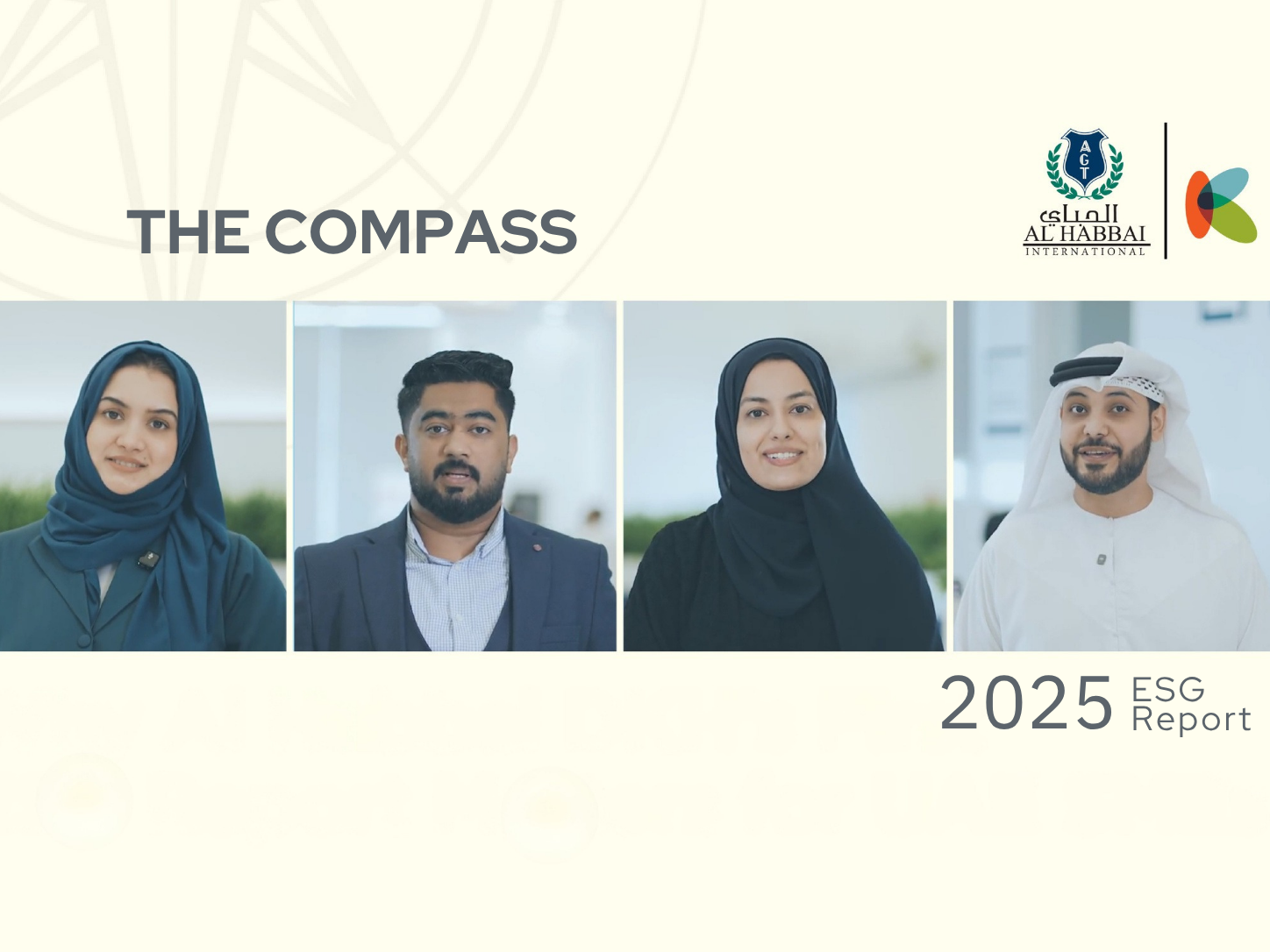
That is why Al Habbai DKH Co. LLC’s first ESG baseline report is a milestone worth examining.
A sector that sits quietly behind an essential service
Al Habbai DKH operates visa medical fitness centres, a sector that sits behind one of the UAE’s most essential public-facing services. Its work involves people, health-related processes, sensitive data, regulated operations, waste handling, safety, service efficiency, and institutional trust.
These are not abstract ESG topics. They are everyday business realities.
The point of a baseline
The purpose of the report was not to produce a glossy document filled with generic sustainability language. It was to establish a clear baseline:
- Where does the company stand today?
- What matters most to the business and its stakeholders?
- Where are the operational risks?
- Which areas need stronger policies, training, tracking, or governance?
- How can the company move from informal good practice to a structured, measurable approach?
That distinction matters.
Too often, ESG is reduced to tree-planting photographs, one-off CSR posts, or vague claims about “being sustainable.” That approach does not survive serious scrutiny. A proper ESG baseline report does something different: it forces the organisation to look inward before speaking outward.
For Al Habbai DKH, the process involved reviewing the company’s operating context, identifying material ESG topics, assessing existing policies and gaps, engaging internal stakeholders, and mapping priorities across environmental, social, and governance areas.
Environmental considerations included waste management, resource efficiency, and operational impact. Social topics covered employee training, workplace safety, client handling, inclusion, and community engagement. Governance areas included ethics, data privacy, compliance, grievance mechanisms, supplier expectations, and internal accountability.
From document to practice
Alongside the report, Recall supported Al Habbai DKH with an ESG action plan, policy development, employee learning modules, and community engagement activities. Training was delivered through a learning management system, designed to make ESG understandable and relevant for employees across different roles and language comfort levels.
If ESG stays inside a PDF, it dies inside a PDF.
Real implementation happens when employees understand what is expected of them, when management has a clear roadmap, when policies become usable, and when activities are measured rather than merely announced.
Why this matters beyond one company
The report arrives as UAE businesses begin to face a new reality. Climate and ESG expectations are no longer limited to the largest companies. Suppliers, service providers, private businesses, and SMEs are increasingly being asked to show how they manage environmental responsibility, employee wellbeing, governance, compliance, and business resilience.
For SMEs, this can feel overwhelming. Many do not know where to start. They may not have dedicated sustainability teams, internal expertise, or large consulting budgets. But that should not become an excuse for inaction.
The first step does not need to be perfect. It needs to be honest.
A baseline report gives a company a starting point. It does not claim that everything is solved. It shows that the company is willing to measure, improve, and be accountable.
That is what makes Al Habbai DKH’s first ESG report meaningful. It reflects a shift from passive compliance to proactive responsibility, and it shows that ESG can be made practical for local businesses, even in sectors not traditionally seen as part of the sustainability conversation.
For the wider SME community in the UAE, the lesson is clear: ESG is not about looking bigger than you are. It is about becoming more disciplined, more transparent, and more resilient than you were yesterday.
The companies that begin early will not just be better prepared for future regulation. They will be better positioned with clients, partners, employees, and communities who increasingly expect businesses to operate with clarity and responsibility.
Al Habbai DKH’s first ESG report is not the end of the journey. It is the foundation.
And for many UAE SMEs, that is exactly where the real work needs to begin.
Ajmal Ashraf is the CEO of Recall, a UAE-based sustainability and resilience company helping SMEs turn ESG from a compliance burden into practical business action.